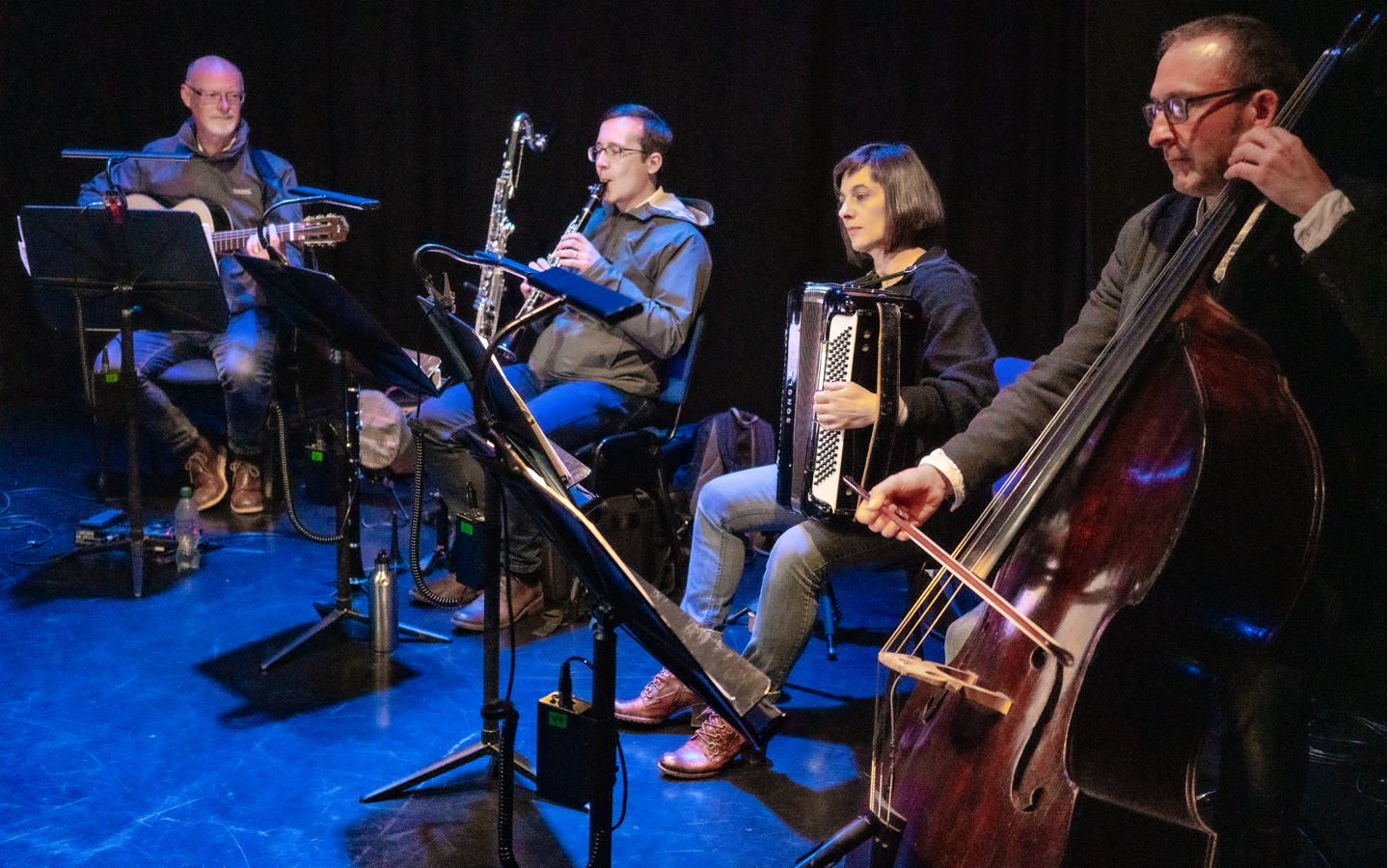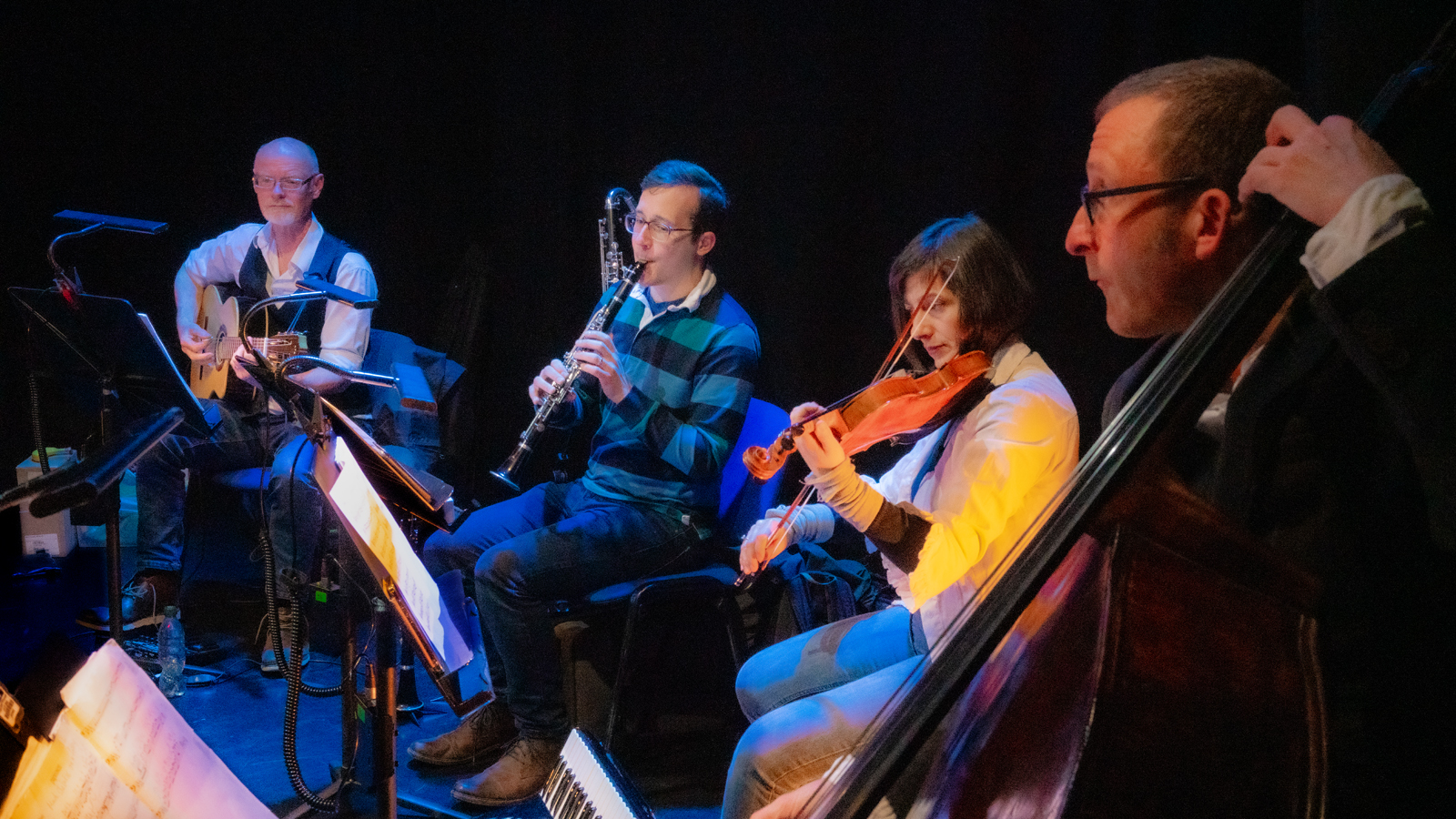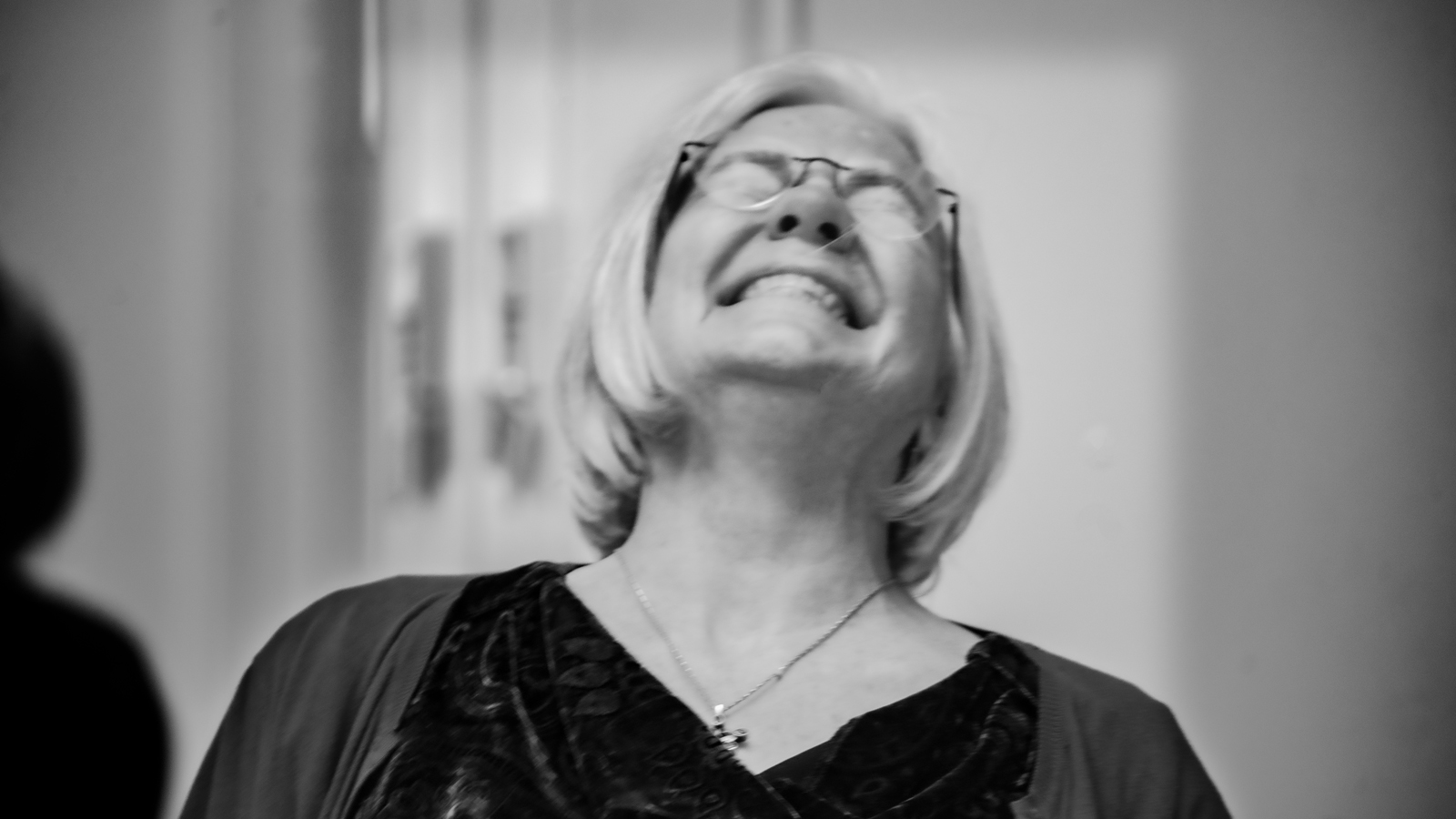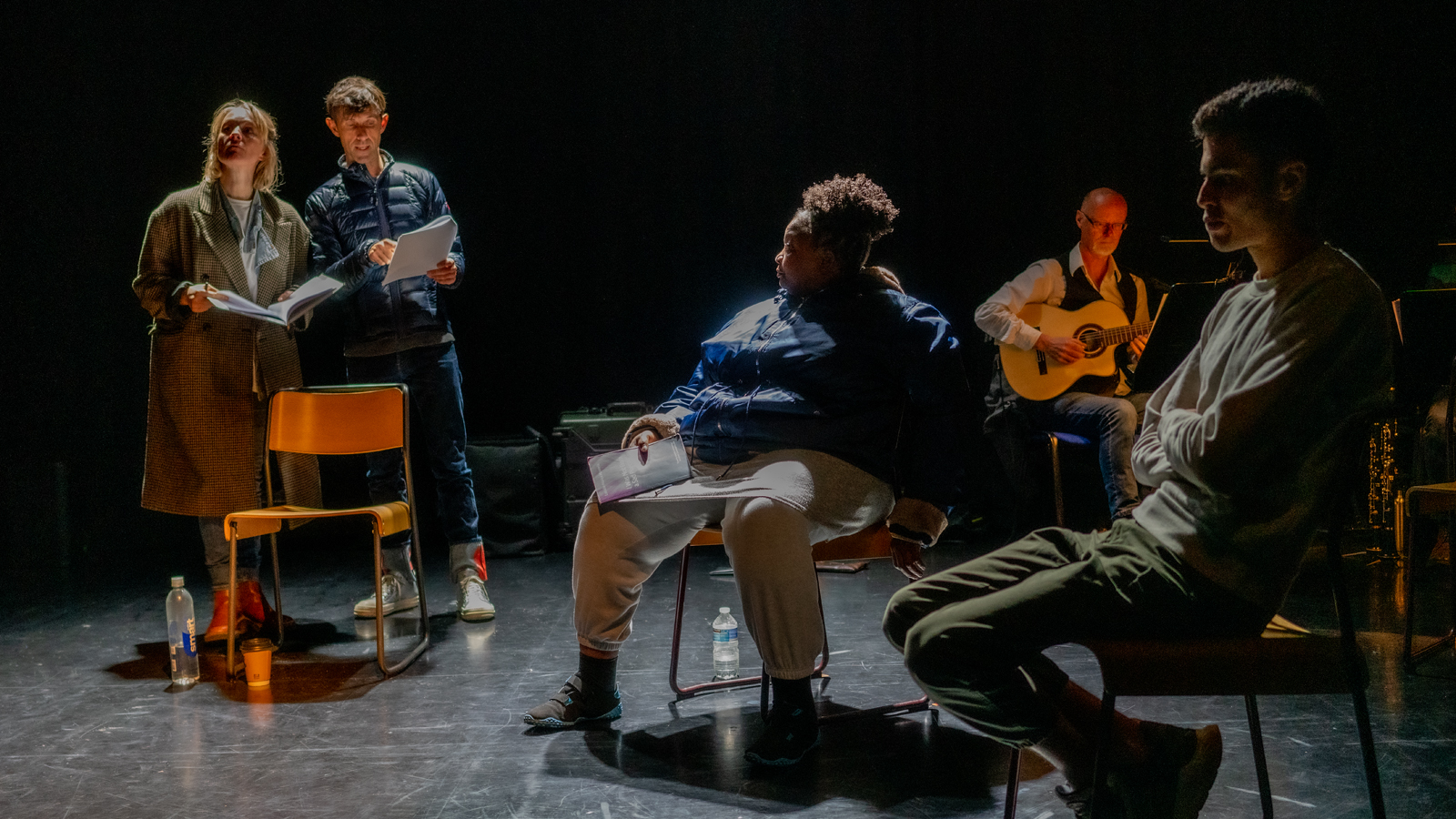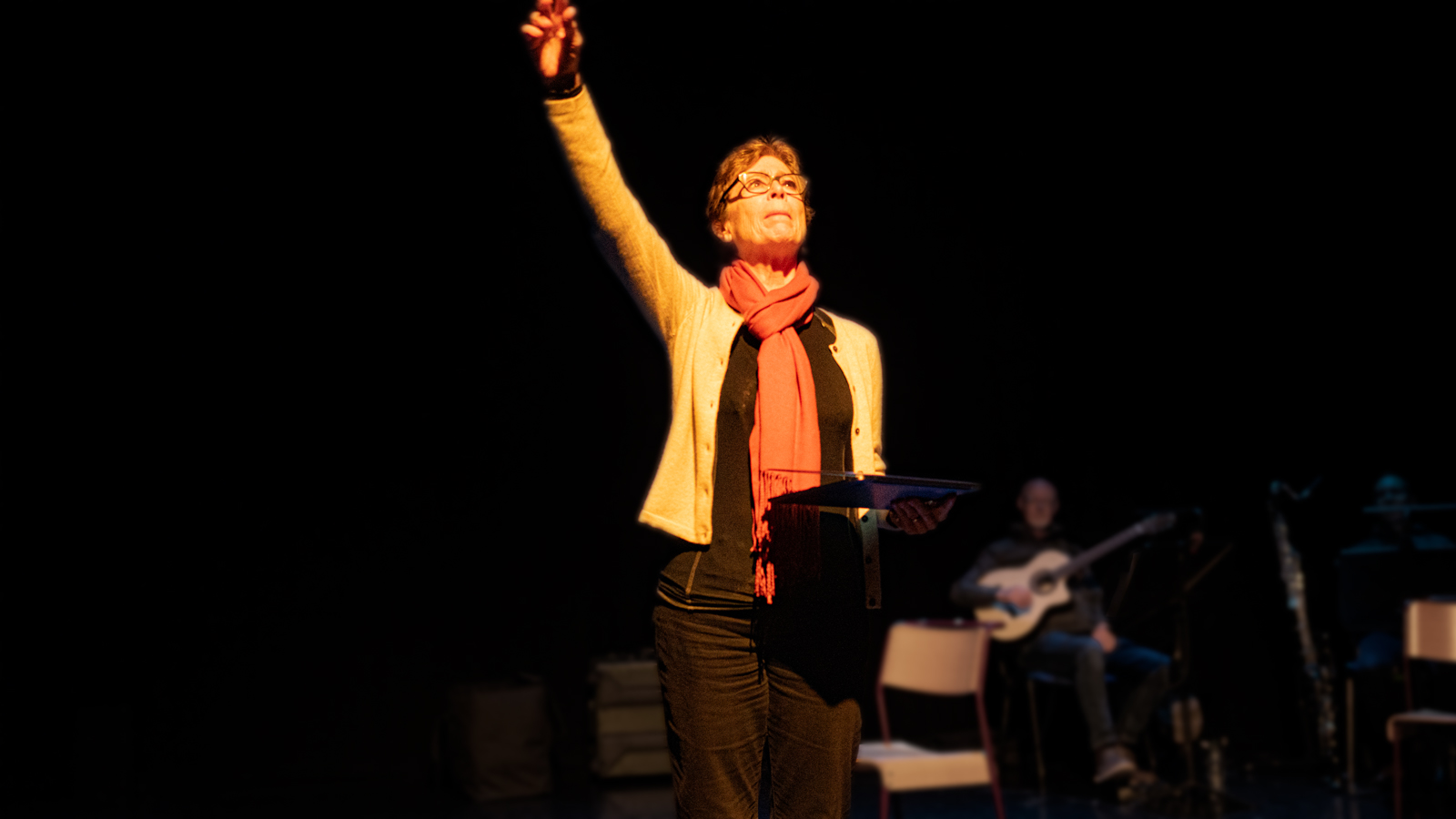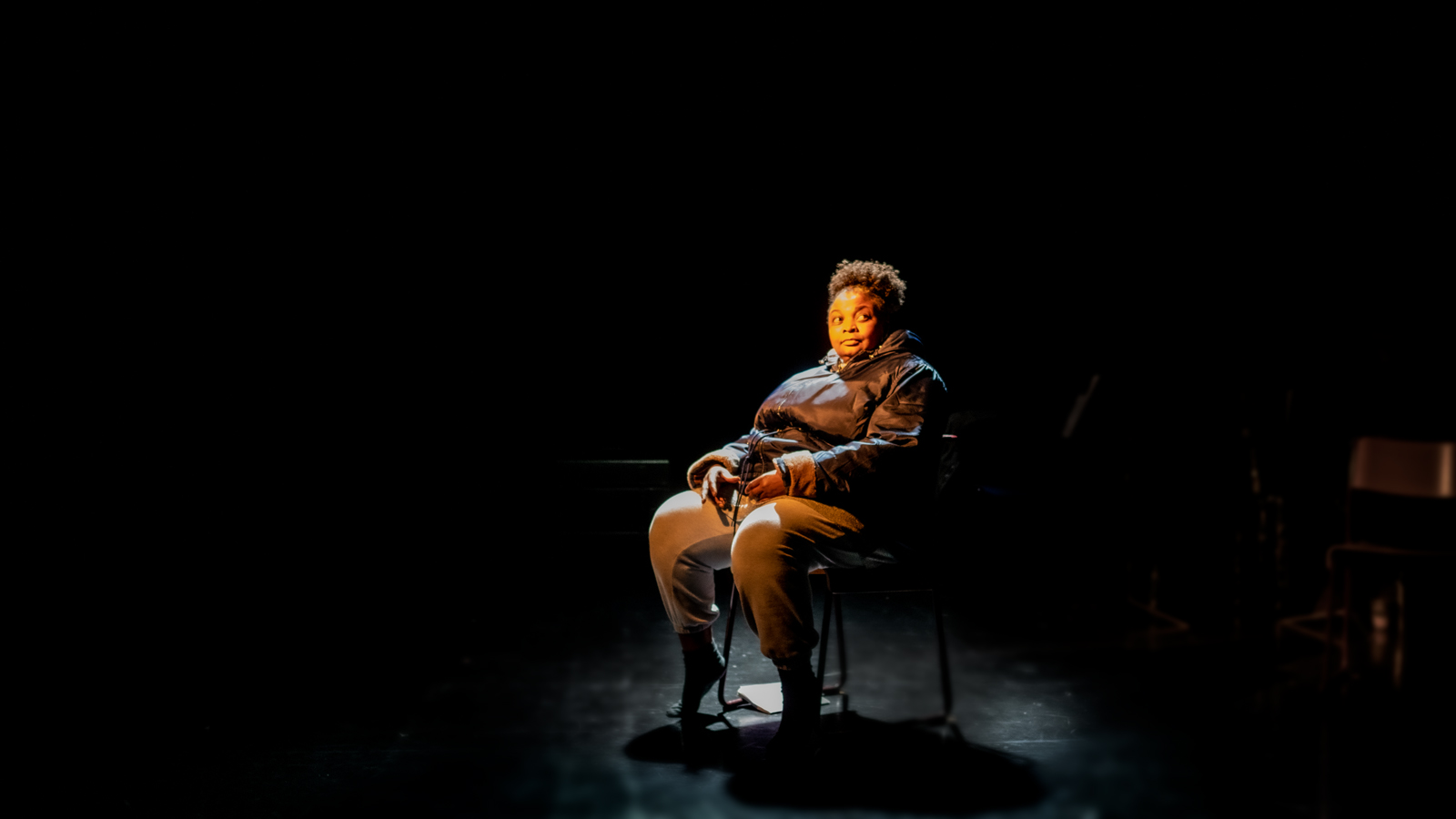
In 2023 and 2024 we created and performed three work-in-progress performances of a piece called ‘Stumbling Stones’ at the Unity Theatre and the Music Room of the RLPO, Liverpool. Extracts were read from Julia Nelki’s book, Villa Russo: A Jewish Story, which tells the history of Julia’s family, back to the 18th century, from being poor Jews in eastern Europe, on the move in different ways in a search for acceptance and security. The events combined dialogue with music and song that brought the stories to life.
We included stories of contemporary refugees from Mali, Rwanda and most of all from a young man from Gaza, Qais, now a student in the UK with what is left of his family. Qais, in his 20’s and Julia, now retired, have been real friends for many years since he first arrived as an asylum seeker and student in the UK. We are currently looking to work with a writer to develop the stories before commissioning the music.
Due to the genocide of the Palestinian people, we stopped developing the work.
At the beginning of the year the company spent a day talking about how we would like to see the work progress, if this was possible.
We spoke for 6 hours and explored many themes. These included home, safety, inherited displacement, memory-laden objects (keys, houses, stones), and the erosion or loss of everyday life through war, colonisation, and forced migration. Julia’s family history and Qais’s Palestinian experience repeatedly surfaced as parallel narratives, particularly the image of empty or inaccessible homes filled with memory and absence. The idea of “landscapes of silence” emerged as a unifying concept: cultural silencing, political fear, interrupted histories, and the suppression of music and storytelling.
This is not only a story about past and present injustices, but also as a response to the present moment: how artists continue to speak, make, and listen amid fear, polarisation, ….and silence, and why doing something, however imperfect, matters more than doing nothing.