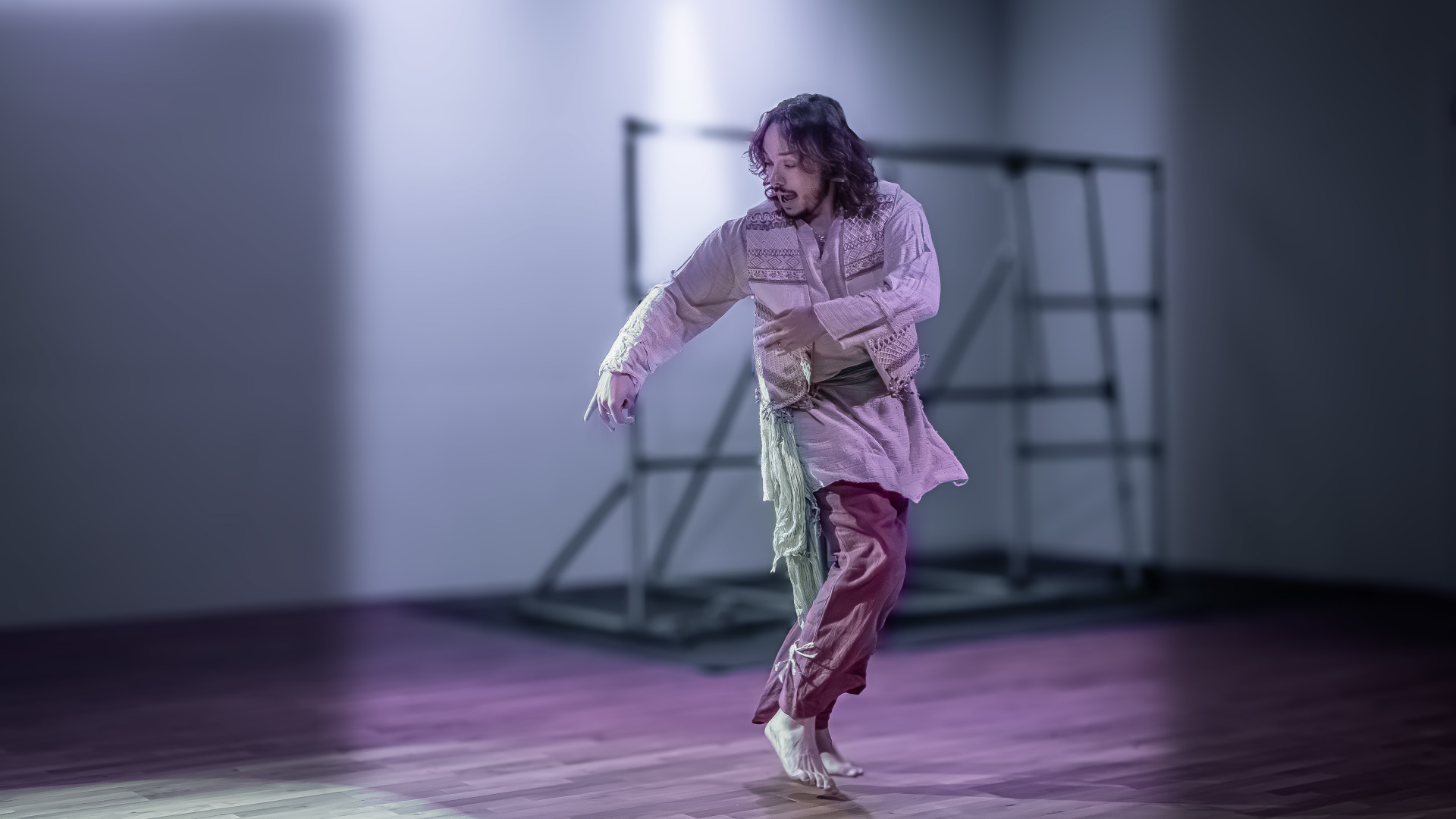
“The right to be”: Visit for cultural professionals to Ukraine
“The right to be”
I wanted to share this quote from one of the artists I’ve spoken with during this week in Ukraine. We were discussing the role for artists and for art in a troubled time like the one in which we live. Over the course of a week we had a chance of truly meeting many of the best artists, cultural institutions, theatres, and professionals in Kyiv (and briefly in Dnipro).
Overall I can’t say I am surprised by the beauty (in the broader meaning of the term) I’ve seen, but once more I felt intimately touched by dignity, strength and beauty in a country that is fighting for the values of freedom, humanity, and for the right to be. After two years coming to Ukraine and working with many great national and international actors, it’s a well-known fact in my mind, not only do they exist, but they have many things to say that are profoundly human.
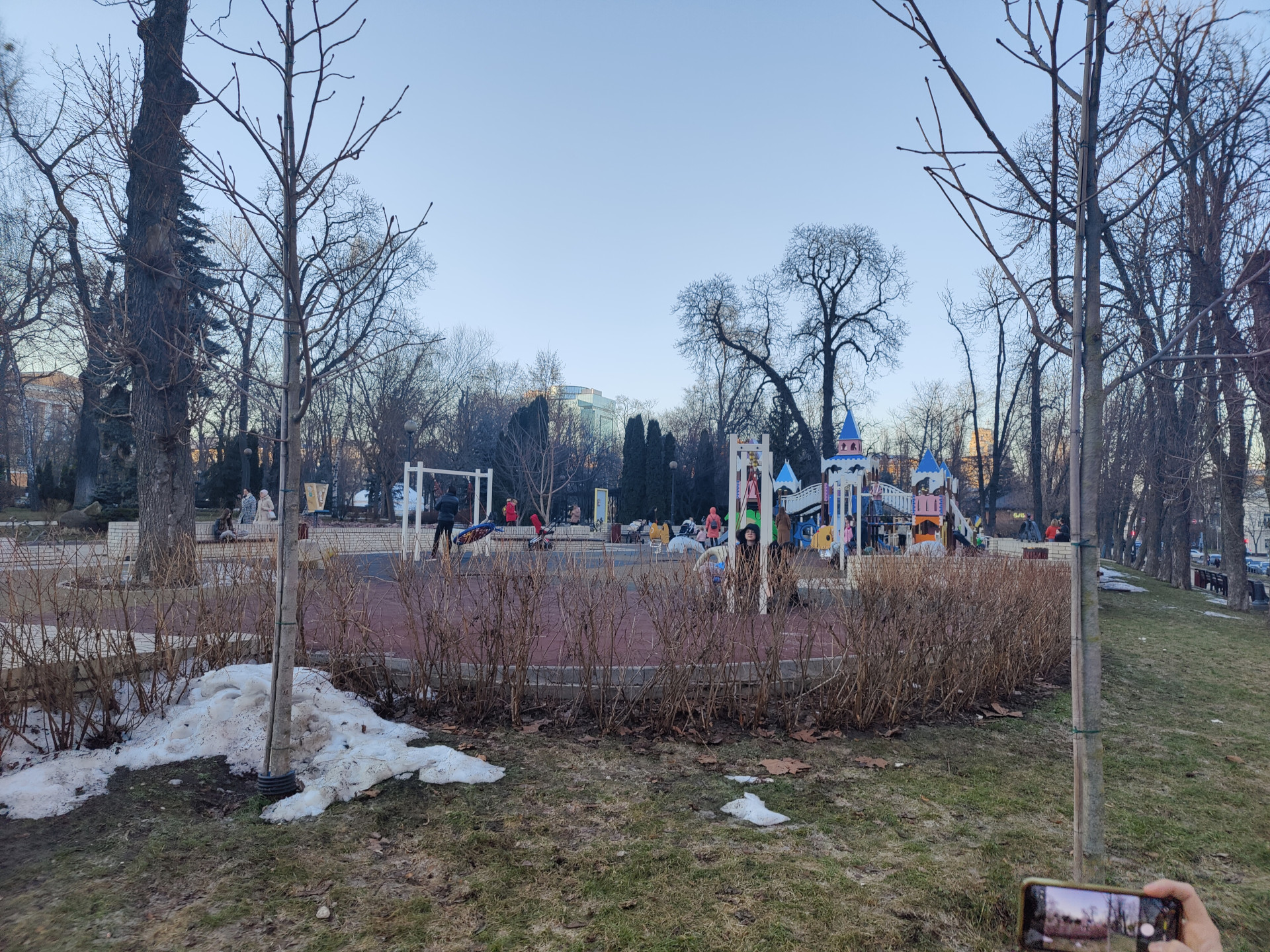
Children playground, it has been rebuilt after an air strike.
Existing despite horror
I underline the obvious because the agenda setting of the public discourse is often polluted by gossip and other distractions, and our attention is dissipated due to the clamour of the many things happening in the world, from Palestine, to Iran, to Sudan, to Eritrea, to Venezuela, and many more.
Opera Circus has been active in many complex contexts during its history, and has been working in the country for over two years, closely with Art Dot and Kings College, amongst others. This collaboration has been developing a framework based on “trauma attuned art therapy” approaches, and with the European Youth Capital 2025 of Lviv, along with the Council of Europe.
This visit was therefore a moment to once more come with the humility of those who want to know more and who feel they must listen whenever there’s the call from someone facing an unjust and unfair situation. The curators of the visit, Olia Diatel (theater producer, cultural manager, and educator) and Alona Karavai (running both curatorial artistic programmes and community arts/socially engaged practices) co-founders of Insha Osvita, assembled a truly artistic program,, with care and expertise, without anything that was less than perfect; allowing us to see beyond the artistic practices per-se, into the stories of the institutions and artists we met.
Pop up display at Zirbka Bookshop
A diary of what we experienced.
I’ve decided to share the program below as we experienced it. I’ll add some pictures from the trip to support and share some of the stories and practices of those we’ve encountered. I’ll try to be precise, to attach links and names, and to offer also a human perspective as I’m confident this won’t be the last time you will read these names. That is because not only I wish further cooperation with Opera Circus, but their work will be rightfully valued and shared in the art and humanitarian world.
I wish to thank everyone who opened their studio, theatre, home to us; to the team of Insha Osvita, to Olia and Alona, to Kate who helped us in every possible way; and to the other artists and cultural actors who embarked on this trip with me. Their work is also incredibly relevant and I suggest you check it out.
Theater on Podol
9 March
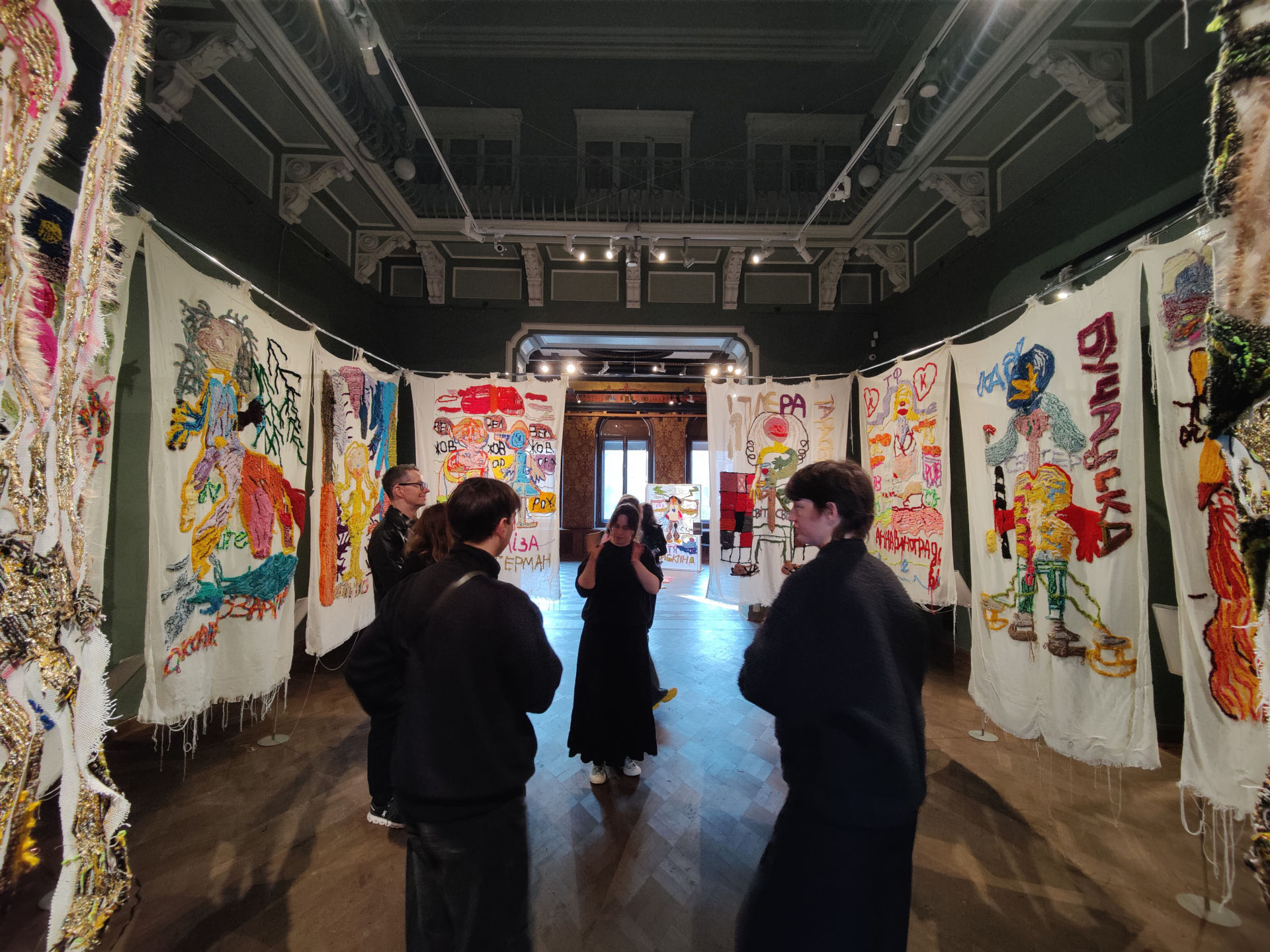
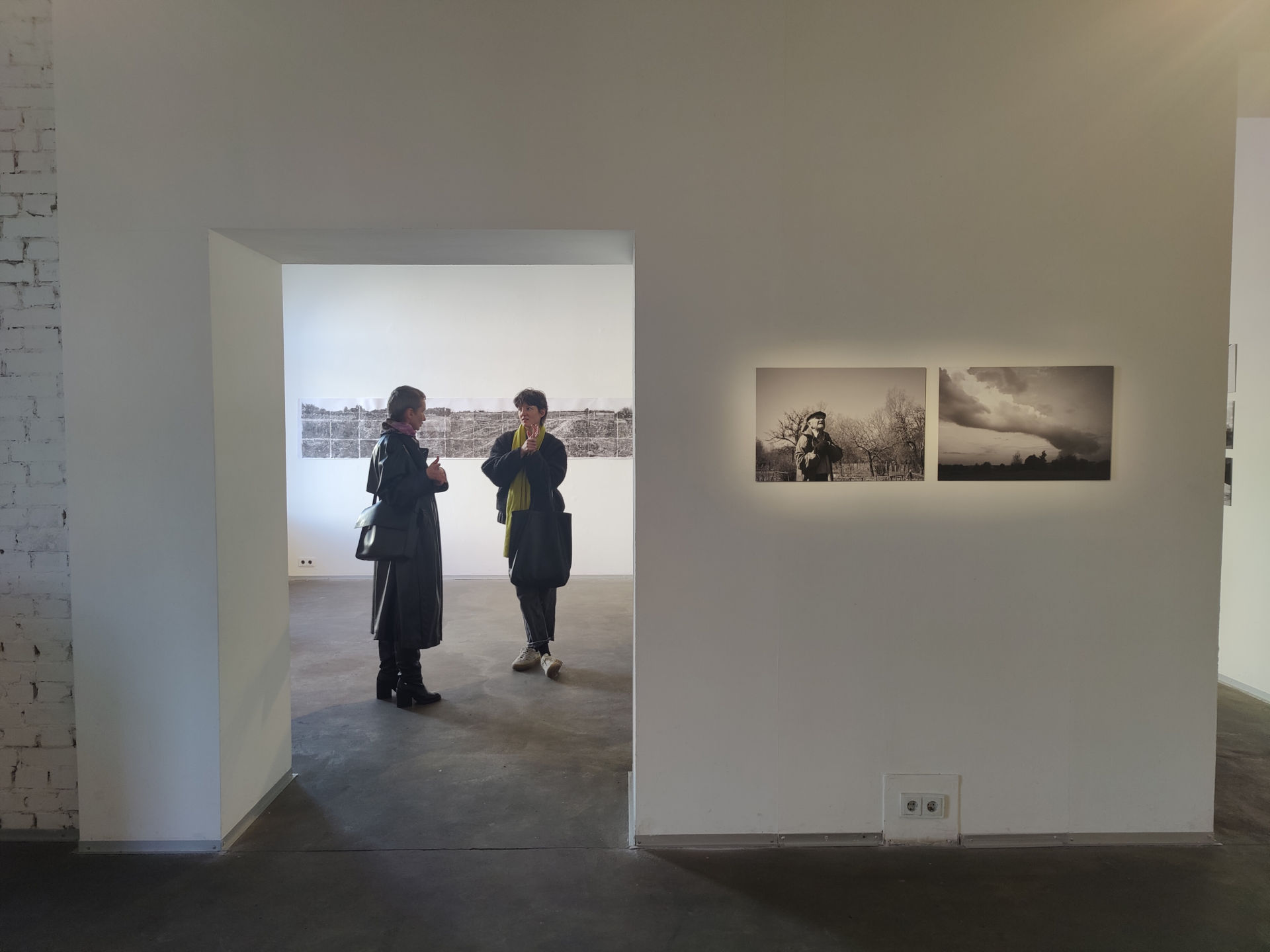
After a walk of the city, we visited the Khanenko Museum, that has is collection secured, but still offers its spaces to art: we saw the work of atelienormalno, “With Artists, Curators, Golden Sunsets”, by Anna Sapon. Here we witness the first Air Alert of a long series: anyone who’s been in Ukraine is used to them, allarms that a rocket or a drone is coming in your direction, and that you must find shelter. But Ukrainians are so used to these that don’t even bother, most of the time, as it’s a constant interruption of life, and normality gets in the way. Us internationals, families with children, these are the people whom you can actually find in the shelters. Ukrainians have come to – sadly – normalise the risk: “Good, it’s a rocket, so it’s just a few minutes”, we heard say a few times, as drones stay in the hair for longer time before hitting, making the forced pauses even longer.
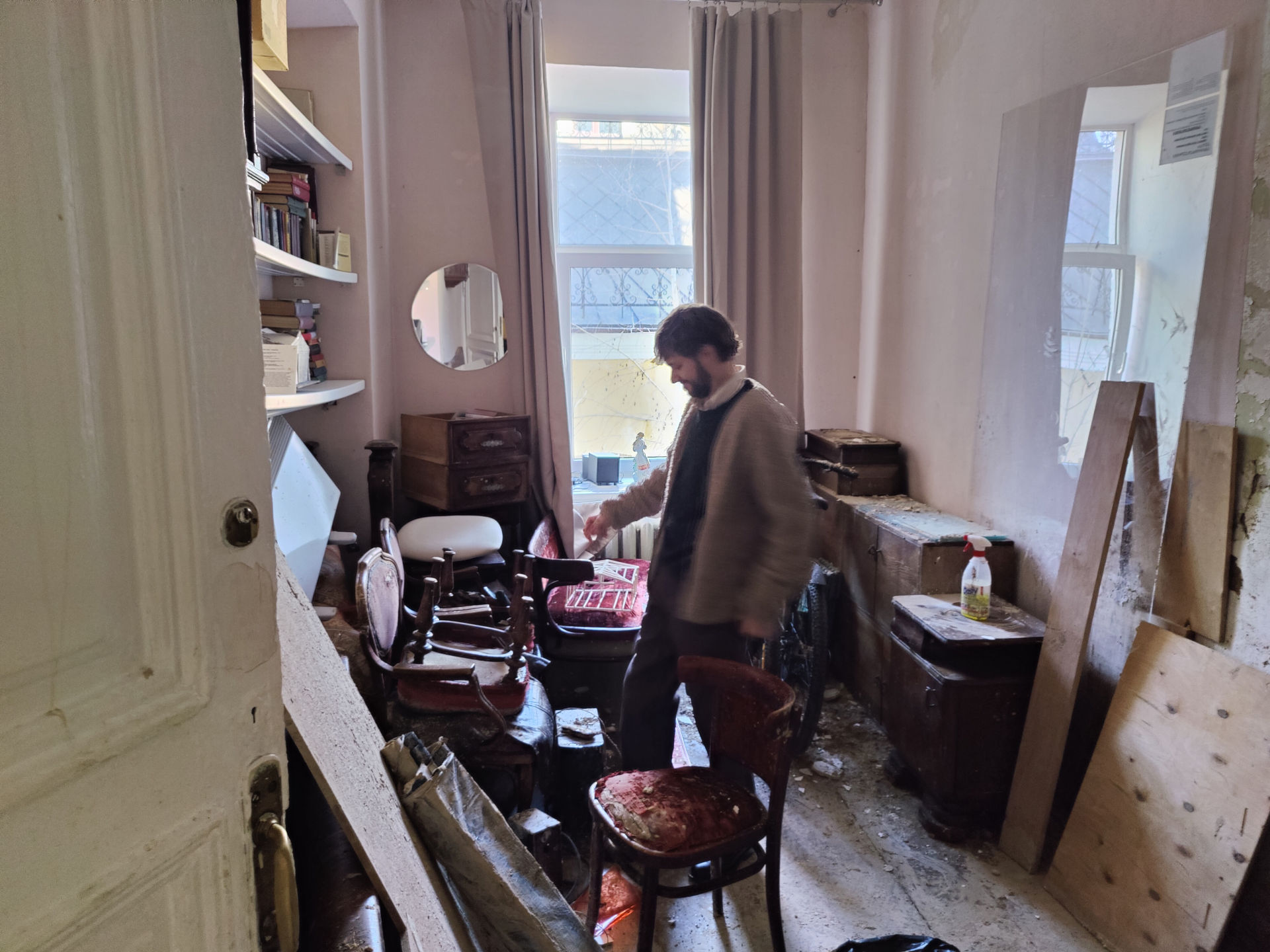
We visited the office of Insha Osvita, getting to know their work more in depth, to then walk to Zbirka bookshop. We had the opportunity to see the former atelier of Yarema Malashchuk and Roman Khimei, true artists (among other things, at Venice Biennale 2024). I called it
“former” as due to the attacks the Russian regime has been conducting against the infrastructures, that caused freezing and exploding of the heating pipes in many houses and buildings. The last winter has been one of the hardest for the Ukrainian population, that year after year has to overcome this vile attack that aims to create powercuts, shortages, and to affect directly the civilian population, as if the violations on human rights in the frontline and the occupied areas (from 2014) weren’t already more than enough.
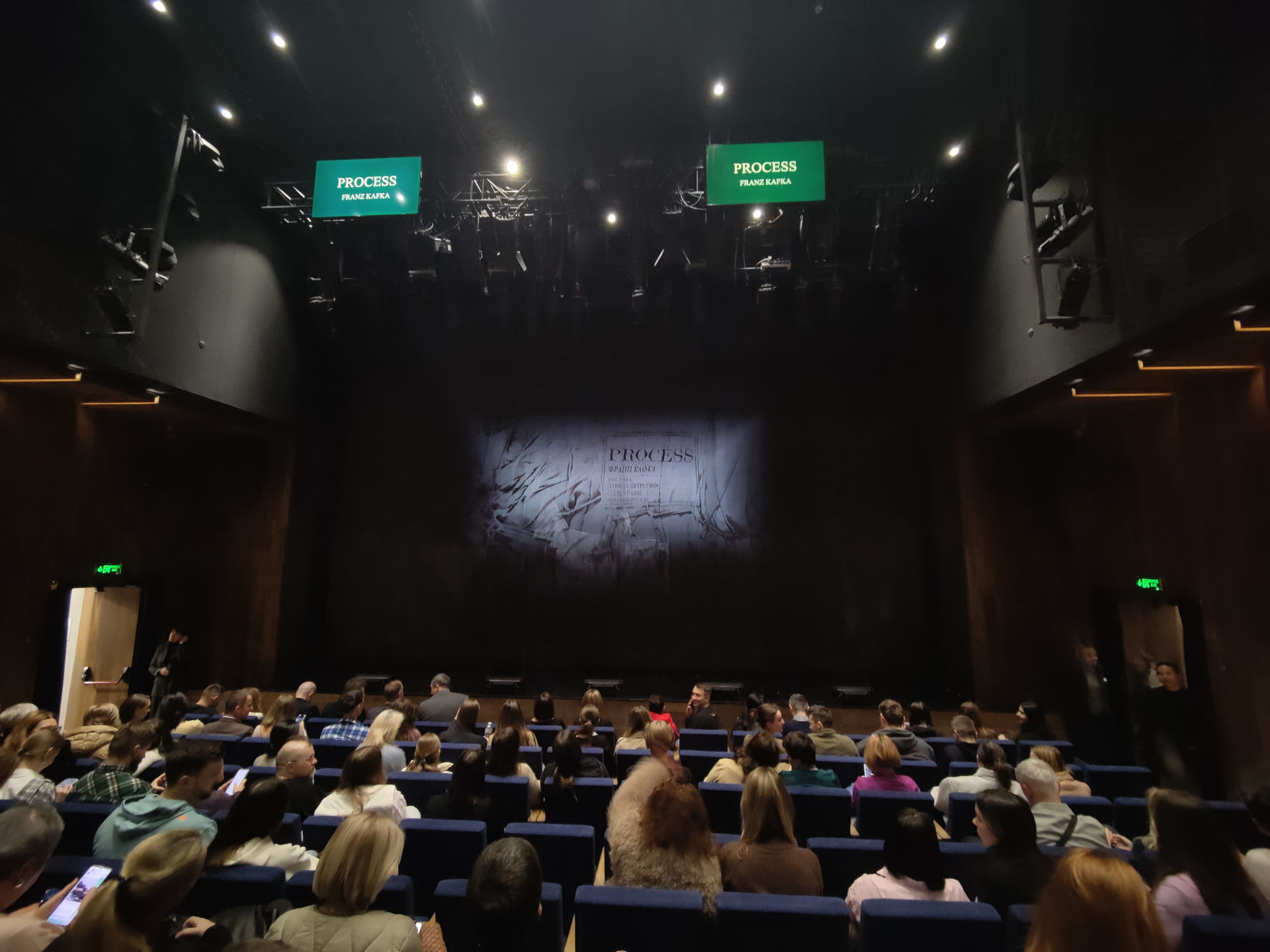
We then visited the Theater on Podol, to watch the Process theatrical adaptation (from Kafka).
Roman Khimei in his studio
11 March
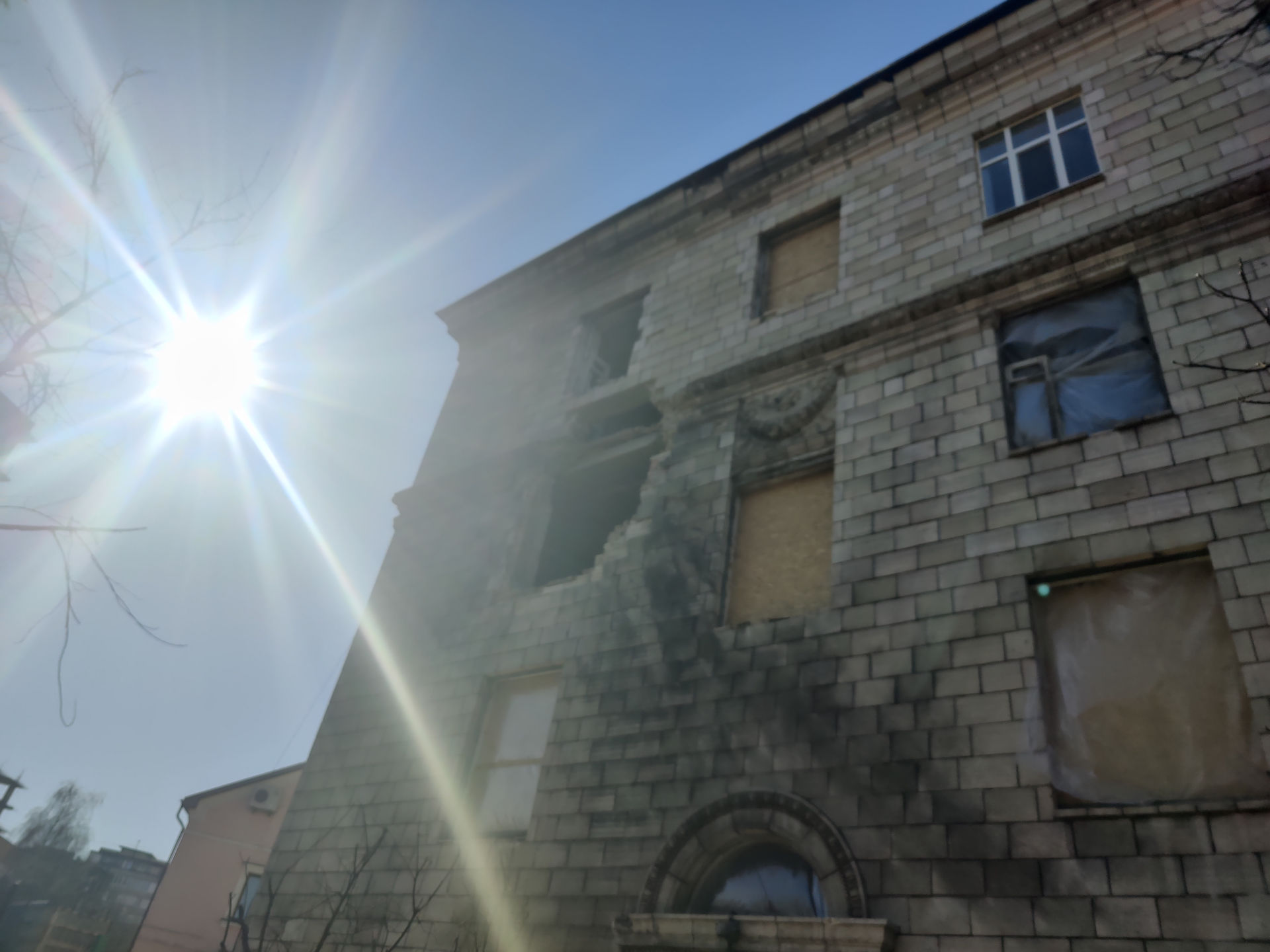
“Here they were hit twice, so it was not a mistake”, they explained to us in front of a hole on the second floor of a Soviet-style building. This place, where the windows are slowly being changed after behind shattered due to a Russian strike, is the house of Nahirna22 studios, where artists have their pop-up galleries, and where they have their studios: a place of creation where imperialism brought destruction. “Not a mistake” because the attacks don’t always target military places, but houses, civil buildings, for the approximation and butchery of blind violence: “this place is called Kyiv Institute of Automation because that is what it used to be during the Soviet Union, but now it’s just artists and cultural organizations”, meaning that Putin’s work is done with Soviet time maps and targets (as it’s known already from 2022).
Here we discovered the work of Darya Sviatun, Shumna, Anna Vekhnyk, Yuriy Bolsa, Krystyna Melnyk, I suggest you check them out. We then walked to the Mystetsky Arsenal and in the Pechersk Lavra, an old monastry complex, finishing the day at the Goethe-Institute, meeting with the Antonin Artaud Fellows, independent performing artists.
One of the damaged points of the Kyiv Institute of Automation
Artist Yuriy Bolsa
Visiting a gallery close to the Arsenal
Previous
Next
12 March
We took an early morning train, to Dnipro, where we visited the DCCC and the Dnipro Art College, meeting the students there and visiting a few of the museums and institutions in the city, trying to stay open and active despite having the take away their art pieces to preserve them in safe places.
We went back in the night, having to stop in the middle of nothing, in the night, where we had to evacuate the train, because there was an attack and it could be a target. The Oblast of Dnipro, in the centre south of Ukraine, is closer to the frontline so more frequently under threat. The drones were above us, we heard them clearly, as we did with some explosion in the distance, once more standing in the dark, defenceless, without anything to do but wait. We arrived in Kyiv in the morning when the hazard was over.
Dnipro visit
Dnipro visit
Previous
Next
13 March
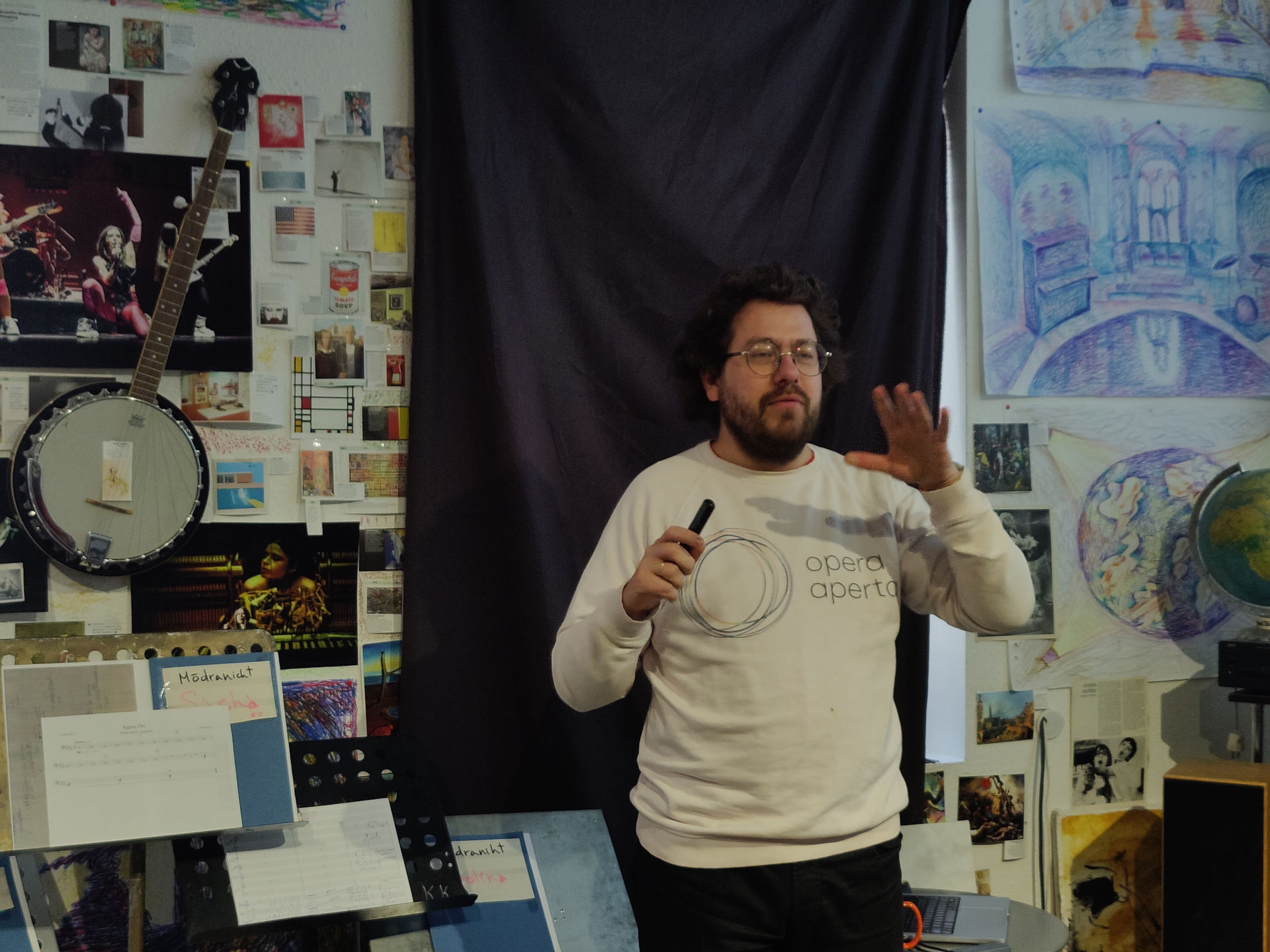
The program kept being better and better, we met Opera aperta in their Studio, with Illia, Roman and their team, which allowed to see an open rehearsal of their last work, which will be premiered this season. Their work is of a precious depth, yet presents itself with the kindness of truth and irony. We visited the Pavilion of Culture and the surrounding area, as well as the National Library.
Opera Aperta, Ilia
14 March
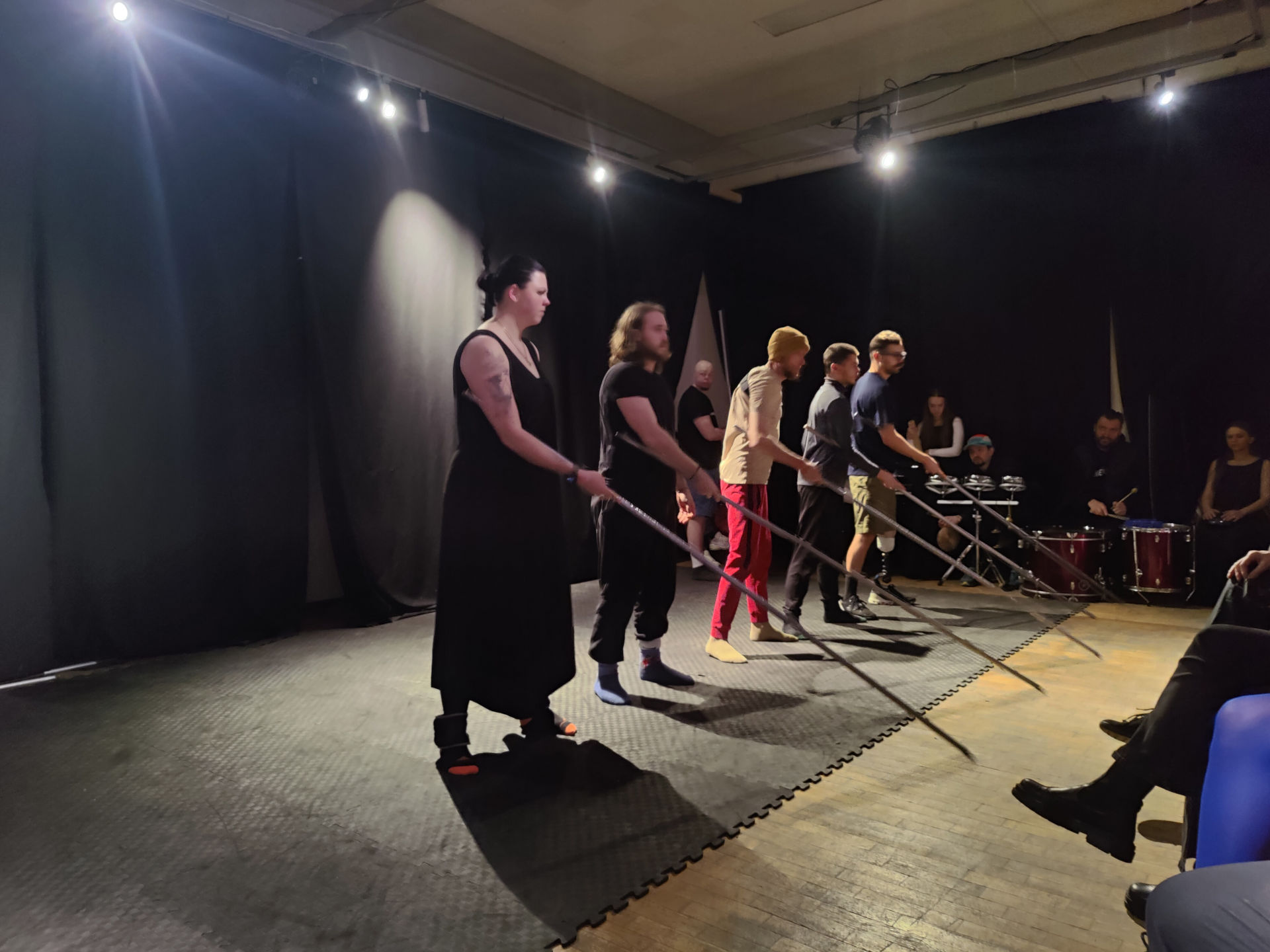
Thanks to the flexibility of the organisers, they modified the program for some of us to also see Camus’ Caligula at the Franka Theatre, after which we discovered the process and performance of the Theatre of Veterans, where trauma and wounds are healed by theatre and community.
Theatre of the Veterans
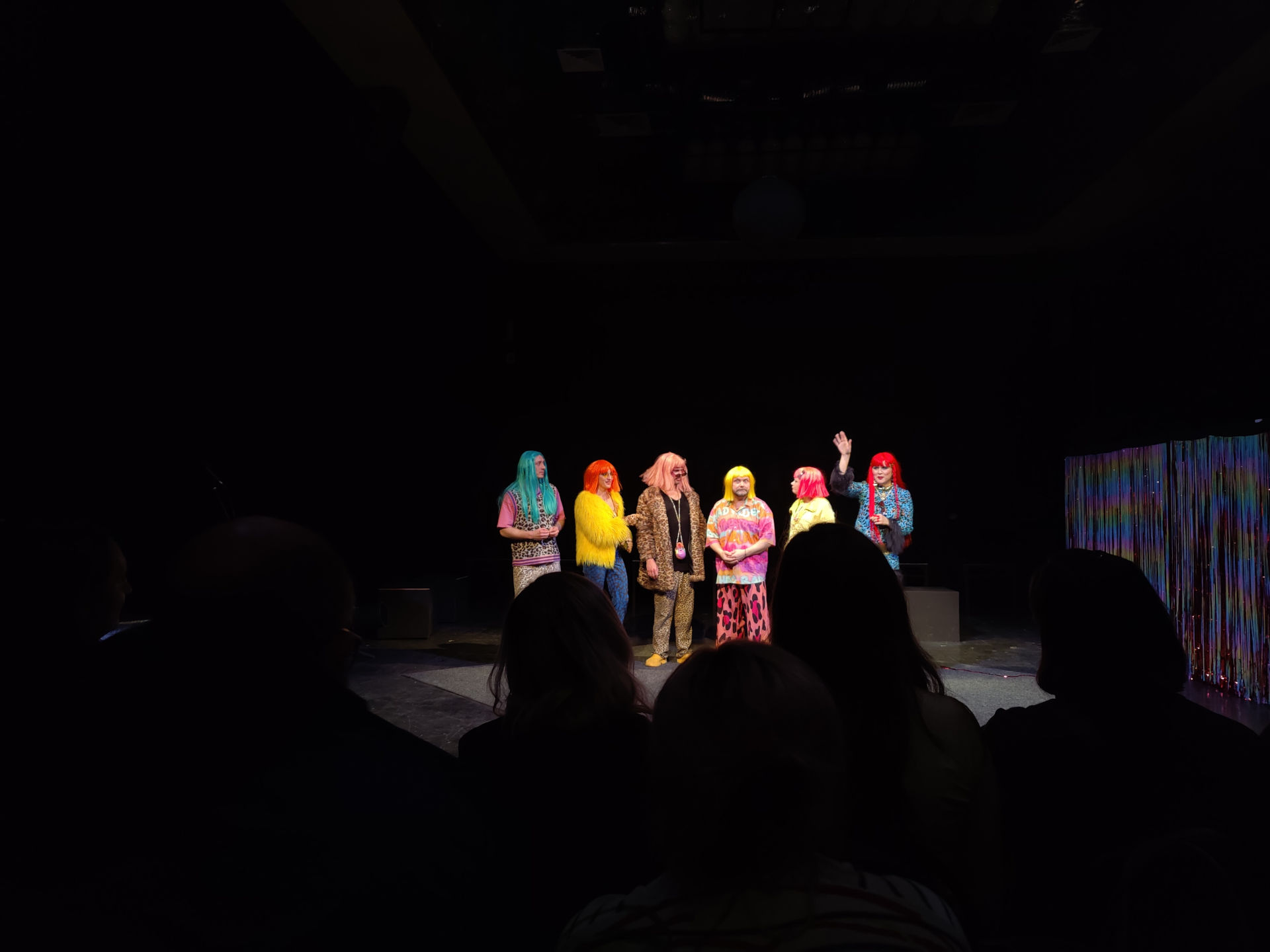
We finished the day -and the program- with a last theatre show “Confronting the Shadow”, by Tamara Trunova, at the Left Bank Theatre. A punch in the stomach for us Europeans, the hours of a colorful and overly pop performance, presenting the absurdity of the struggle this nation has been sustaining for more than a decade, exposing its most intimate aspects through the eyes of a theatre company and ultimately making the “westerns” face their (our) hypocrisy. Yet, the show finished with a message: “Enjoy life”, which is the extreme demonstration of how humanity is resisting to horror.
Confronting the Shadow
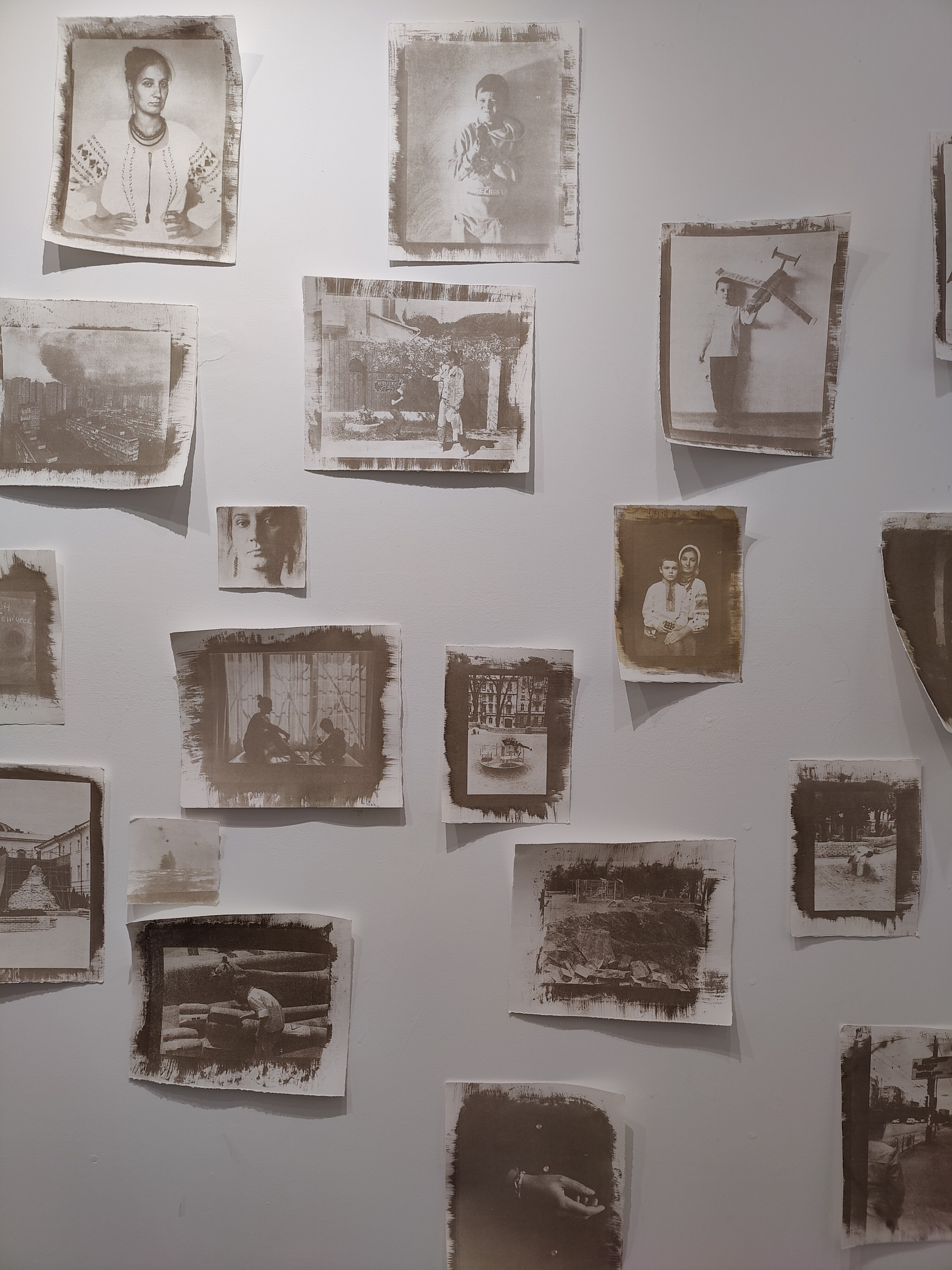
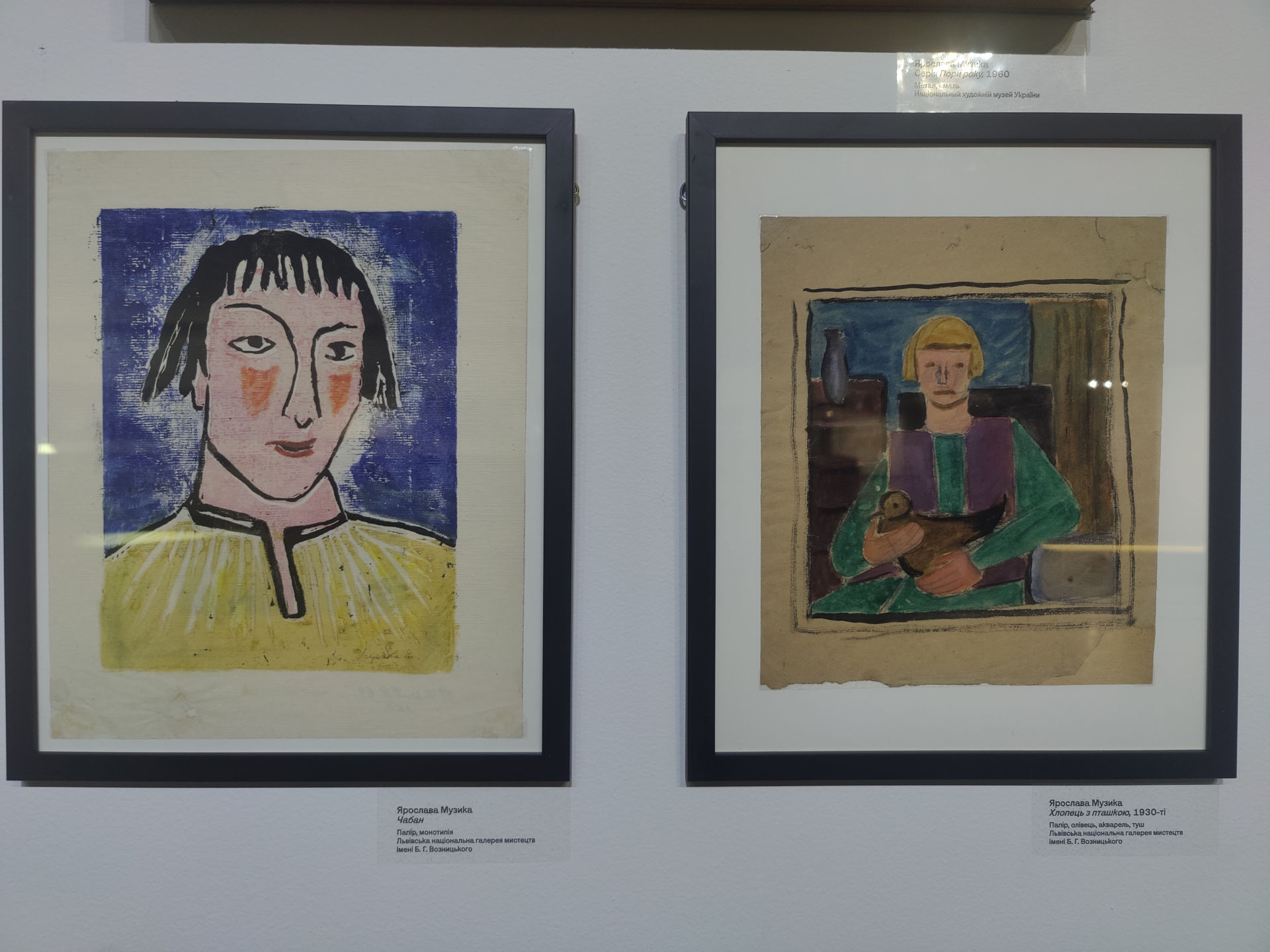
"Spring. Female Names of Boychukism" at the Ukrainian House